And if the music itself isn’t enough to keep you engaged, the behind-the-scenes storylines — Liam Gallagher’s history of colorful opinions, Peter Hook’s ongoing feud with his former bandmates, Phil Collins’s uncertain health — guarantee this year’s ceremony will be must-watch television.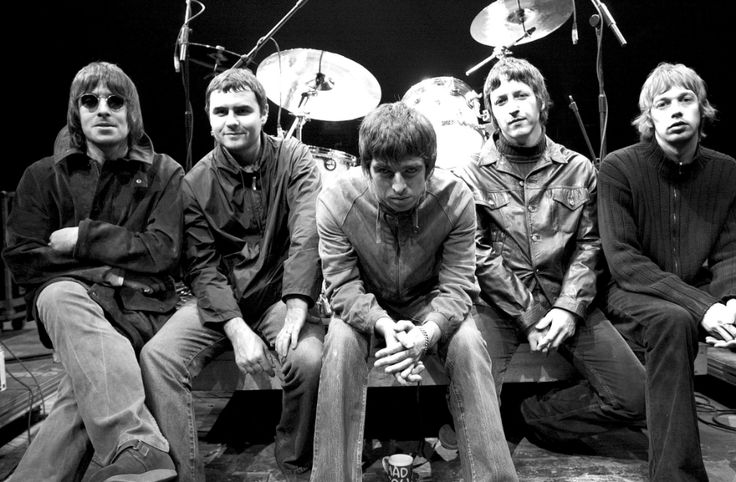
The 2026 Performer Inductees: Who Made the Cut
The following eight artists were selected through the official balloting process, which includes votes from music industry professionals, historians, and a rotating panel of artists:
- Phil Collins – The legendary Genesis drummer and solo superstar finally earns his individual recognition after decades of chart dominance.
- Billy Idol – The punk-turned-pop icon whose bleached hair and sneering charisma helped define the MTV era gets his well-earned moment.
- Iron Maiden – The British heavy metal titans who have spent over four decades selling out arenas and inspiring generations of headbangers finally claim their spot.
- Joy Division/New Order – Two bands, one induction: the post-punk legends who evolved out of tragedy into one of electronic music’s most influential forces.
- Oasis – The Gallagher brothers’ Britpop empire, responsible for some of the most anthemic rock records of the ’90s, is in — whether Liam likes it or not.
- Sade – The silky, sophisticated Nigerian-British singer and her band brought a cool elegance to ’80s and ’90s music that still sounds utterly timeless.
- Luther Vandross – One of the greatest voices in R&B history, Vandross left behind a catalog of slow jams and ballads that remain unmatched in emotional depth.
- Wu-Tang Clan – The Staten Island hip-hop collective that rewrote the rules of rap, branding, and mythology in the mid-’90s and never really stopped influencing everything.
The Nominees Who Didn’t Make It
With a record 17 nominees on the table, the math was never going to be kind to everyone. Nine artists fell short of induction this cycle — and while the Rock Hall bristles at the word “snub,” fans are under no such obligation. The artists who will have to wait at least another year include:
- The Black Crowes
- Jeff Buckley
- Mariah Carey
- Melissa Etheridge
- Lauryn Hill
- INXS
- New Edition
- Pink
- Shakira
Several of these artists have been through the nomination process before without success, and their continued exclusion will fuel debate well into next year’s cycle. Lauryn Hill’s absence is particularly glaring given the towering cultural impact of The Miseducation of Lauryn Hill, while INXS fans have been making their case for years. Mariah Carey, one of the best-selling artists of all time, is the kind of omission that generates genuine head-scratching. Expect all of these names to surface again.
The Fan Vote: Loud, But Not Loud Enough
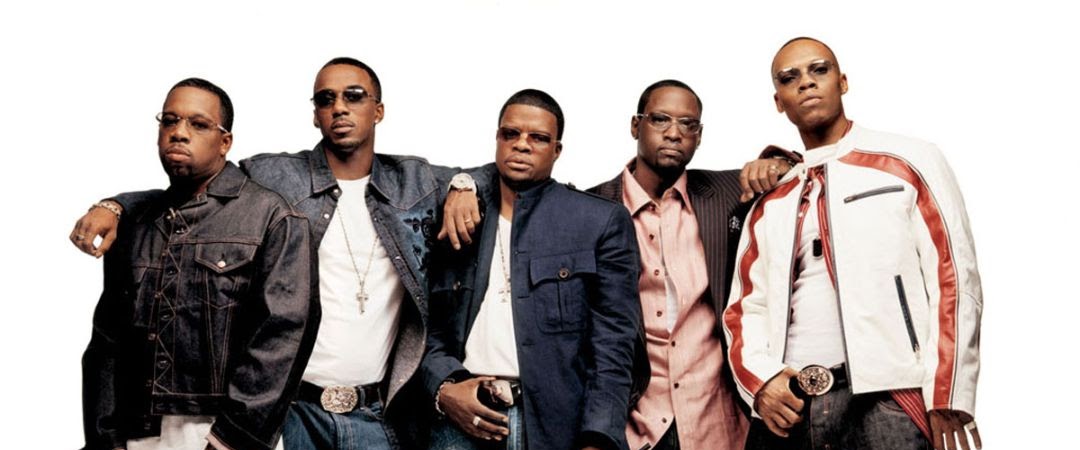
New Edition swept the fan vote — the annual online popularity contest that draws significant attention and engagement each year — yet still couldn’t convert that momentum into a top-eight finish. The fan vote is tallied as a single collective ballot, meaning it carries the same weight as one industry voter rather than the tens of thousands of people who actually participated. It’s a quirk of the system that frustrates fans every year, and New Edition’s situation this cycle puts that tension front and center. Their exclusion despite winning the fan poll will likely reignite the perennial conversation about how much the public’s voice actually matters in the process.
Beyond the Ballot: 10 Committee-Selected Honorees
The Rock Hall has always found ways to broaden its reach beyond the standard performer vote, and 2026 is no exception. Ten additional honorees were chosen directly by Rock Hall committee members, recognized in three distinct categories that celebrate influence, craft, and industry legacy.
Early Influence Award
This category honors artists whose work laid the groundwork for rock and roll and popular music long before the Hall’s eligibility window — or whose impact transcends easy categorization:
- Celia Cruz – The undisputed Queen of Salsa, Cruz’s powerful voice and electric performances made her one of the most beloved Latin artists of the 20th century. This marks her first-ever nomination and immediate induction.
- Fela Kuti – The Nigerian musician, activist, and Afrobeat pioneer whose genre-defying work influenced everyone from Talking Heads to Beyoncé. Kuti had been nominated twice previously without breaking through the standard vote.
- Queen Latifah – A trailblazing rapper, actress, and cultural force who helped establish women’s voices as central to hip-hop’s identity. Like Cruz, she receives her first nomination alongside her induction.
- MC Lyte – One of hip-hop’s first significant female solo artists, MC Lyte’s sharp lyricism and commanding presence opened doors that countless artists have walked through since. Also a first-time nominee.
- Gram Parsons – The cosmic cowboy credited with inventing country rock, Parsons had been nominated three times through the traditional ballot — the last attempt coming more than two decades ago — without ever making it in. His recognition here feels both overdue and appropriate.
Musical Excellence Award
This category spotlights the producers, songwriters, musicians, and behind-the-scenes architects who shaped the sound of popular music without always getting their names on the marquee:
- Linda Creed – The gifted songwriter behind Whitney Houston’s “Greatest Love of All” and numerous other classics, Creed’s catalog of emotional, enduring songs earns her a richly deserved spot.
- Arif Mardin – A legendary producer and arranger who worked with artists ranging from Aretha Franklin and Bette Midler to Norah Jones and the Bee Gees. His fingerprints are all over decades of essential recordings.
- Jimmy Miller – Best known for his transformative production work with the Rolling Stones during their creative peak — Beggars Banquet through Exile on Main St. — Miller helped craft some of the most iconic rock records ever made.
- Rick Rubin – Perhaps the most famous producer in modern music history, Rubin’s career spans everything from early Run-DMC and the Beastie Boys to Johnny Cash’s American series, Red Hot Chili Peppers, Metallica, and Jay-Z. His induction was frankly a long time coming.
Ahmet Ertegun Award
Named for Atlantic Records founder Ahmet Ertegun, this award goes to non-performing industry figures whose contributions to music’s broader cultural landscape have been indispensable:
- Ed Sullivan – The iconic television host whose variety show introduced American audiences to the Beatles, Elvis Presley, and countless other transformative acts. It’s impossible to overstate how much Sullivan’s platform shaped popular music in the United States.
How and Where the Inductees Were Announced
In a move that blends music history with prime-time spectacle, the full class was unveiled live on a Monday night episode of American Idol — a Rock Hall-themed broadcast hosted by Ryan Seacrest and 2022 inductee Lionel Richie. It’s a fitting venue in some ways: a show built around discovering new talent announcing the artists who shaped the very definition of what popular music could be.
Ceremony Details: Date, Venue & Broadcast Info
The induction ceremony is scheduled for November 14, 2026, in Los Angeles at the Peacock Theater. The event will air on ABC and Disney+ at some point in December. Notably, this year’s broadcast appears to be departing from the live-streaming model that Disney employed from 2023 through 2025, during which the full show streamed live on Disney+ before an edited version landed on ABC months later. For 2026, a live broadcast seems to have been dropped from the plan entirely — a decision that will likely disappoint fans who’ve grown accustomed to watching the ceremony unfold in real time.
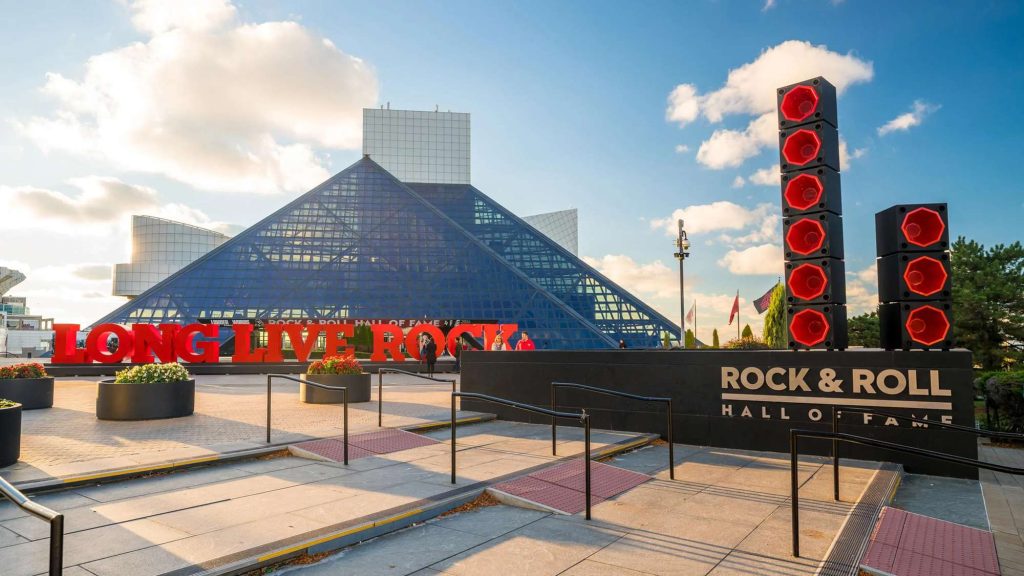
Ticket information for the Peacock Theater event has not yet been released but will be announced at a later date. Looking further ahead, the 2027 ceremony will rotate back to Cleveland, Ohio — home of the Rock & Roll Hall of Fame museum itself — for a year before presumably returning to a major market.
First-Timers and Persistent Nominees: The Backstory
Phil Collins enters the Hall for the second time, having previously been inducted as a member of Genesis — but 2026 represents his first ballot appearance as a solo artist, a distinction that reflects just how different his solo career was from his work with the band. His solo run produced a string of massive hits that dominated the ’80s and early ’90s in a way few artists have managed, making his individual induction feel less like a formality and more like a genuine milestone.
Luther Vandross and Wu-Tang Clan join Collins as first-ballot inductees — artists who earned enough votes to get in on their very first nomination. It’s a rare achievement that speaks to the depth of respect both acts command across the voting community. For Vandross, who passed away in 2005 after suffering a stroke, the induction is a posthumous recognition of a voice and a body of work that defined romantic R&B for an entire generation.
Oasis, Iron Maiden, and Joy Division/New Order each needed three nominations before finally clearing the bar — a testament to both the competitiveness of the process and the enduring advocacy of their fanbases. Sade and Billy Idol were each on the ballot for the second time before earning their spots, suggesting the voters simply needed one more year to come around.
The Early Influence category tells its own compelling story. Gram Parsons, whose pioneering fusion of country and rock in the late ’60s and early ’70s influenced the Eagles, the Rolling Stones, and an entire generation of Americana artists, had been nominated three times through the standard ballot — the most recent attempt coming over two decades ago — without ever breaking through. Fela Kuti, the revolutionary Nigerian musician who essentially invented Afrobeat and weaponized music as political protest, had been passed over twice. The committee’s decision to induct both artists through the Early Influence category is a practical acknowledgment that the standard voting process sometimes fails artists who don’t fit neatly into rock’s traditional canon, even when their influence on that canon is undeniable.
Liam Gallagher and the Rock Hall: A Love Story (Sort Of)
Of all the storylines heading into November, Liam Gallagher’s relationship with the Rock & Roll Hall of Fame may be the most entertaining. When Oasis first appeared on the ballot back in 2024, the notoriously outspoken frontman made his feelings abundantly clear on X, posting: “Fuck the Rock n Roll hall of fame its full of BUMBACLARTS” (sic). He wasn’t done. Still in the thick of his long-running feud with brother Noel at the time, Liam added: “The little fella loves hanging out with celebrities so he’d prob go; as for me I’m washing my hair and having a pedicure and a manicure.”
A lot has changed since then. The Gallagher brothers have reconciled — dramatically and publicly — for an Oasis reunion tour, which complicates the calculus considerably. The question is no longer just whether Liam will show up, but whether his renewed relationship with Noel changes his stance on the whole enterprise. Would he really let Noel attend alone now that they’re back on speaking terms? The Hall has seen its share of reluctant honorees over the years. Dolly Parton famously declined her initial nomination, then graciously accepted after a public conversation about her eligibility. John Lydon and Todd Rundgren have been more permanently resistant, choosing to skip their respective ceremonies entirely. Last year, Chubby Checker — who had spent years publicly criticizing the Hall for overlooking him — declined to attend in person after finally receiving recognition, though he did submit a taped acceptance speech filmed at a live performance. Liam’s trajectory remains anyone’s guess.
New Order, Peter Hook, and a Feud That May or May Not Be Finished
The Joy Division/New Order induction brings with it one of the more complicated interpersonal dynamics in rock history. Peter Hook, the bassist whose distinctive melodic bass lines are arguably the defining sonic fingerprint of both bands, has been estranged from the remaining members of New Order for well over a decade. The group first went on hiatus in 2007, then reconvened in 2011 — without Hook. He responded by filing a lawsuit against his former bandmates, which was eventually settled in 2017.
Hook’s feelings haven’t softened much since. Speaking publicly as recently as last year, he said: “Everything is colored by the animosity… I don’t think they’re New Order. They don’t sound like anything like them.” Whether the Hall’s stage can serve as neutral ground for even a temporary reunion is a genuinely open question, and one that adds significant dramatic weight to what would otherwise be a straightforward celebration of two monumentally influential bands.
It’s worth noting the emotional complexity layered into this particular induction. Joy Division came to an end under devastating circumstances: lead singer Ian Curtis died by suicide in May 1980, just as the band was on the verge of its first North American tour. The surviving members rebuilt under the name New Order and went on to help define post-punk and electronic dance music throughout the ’80s and ’90s. Their induction honors both chapters of that journey simultaneously.
Who Will Actually Take the Stage in November?
One of the most anticipated aspects of any Rock Hall ceremony is the live performances, and the 2026 class offers a fascinating mix of possibilities and question marks.
Phil Collins is almost certainly not performing. He officially retired from touring in 2022 due to ongoing health issues and has been candid about requiring around-the-clock care. That said, the Hall has a way of coaxing unexpected moments out of artists, and fans will hold onto hope.
Billy Idol remains an active touring artist and would be expected to deliver a high-energy set. His catalog — “White Wedding,” “Rebel Yell,” “Eyes Without a Face” — is tailor-made for a celebratory stage moment.
Iron Maiden continues to tour extensively at an age when most bands have long since called it a day. If they show up, expect nothing less than full theatrical production values. Bruce Dickinson on the Rock Hall stage would be a moment.
Wu-Tang Clan is an interesting case. The collective has toured in various configurations over the years, and questions about full membership participation tend to follow them. Still, even a partial Wu-Tang performance would be a highlight of any ceremony.
Sade would arguably be the biggest coup of all. The band has been essentially dormant since their 2010 album Soldier of Love and hasn’t toured since 2011. A Sade performance at the Rock Hall would be a rare live appearance from one of the most mythologized acts in contemporary music — the kind of thing that makes the ceremony appointment viewing.
Luther Vandross, who passed away in 2005, will obviously not be performing, but a tribute performance featuring artists he influenced or collaborated with could be among the evening’s most emotional moments.
The Joy Division/New Order performance situation is complicated for the reasons discussed above, but a version of New Order taking the stage — with or without Peter Hook — would still be a significant moment for fans of that era.
Why This Class Matters
The 2026 Rock & Roll Hall of Fame class is a genuinely diverse and meaningful group of inductees. It spans British heavy metal and Britpop, American R&B and hip-hop, Nigerian Afrobeat and Latin salsa, post-punk electronica and punk-inflected new wave. It honors behind-the-scenes legends who shaped the sound of popular music without ever seeking the spotlight, and it corrects some long-standing omissions through the Early Influence category.
It’s also, inevitably, a class with its share of controversies — artists who didn’t make it in despite compelling cases, a fan vote that once again didn’t carry the weight its participants hoped for, and a broadcast situation that has quietly walked back one of the more fan-friendly innovations of recent years. But that tension between celebration and frustration has always been part of the Rock Hall’s identity. The arguments it generates are, in their own way, a testament to how much people still care about the music.
Mark your calendars for November 14. This one’s going to be worth watching!